
Sign In
World's First Free Verified Atlas of Education
About EduAtlas
A Global Atlas for a Global Education System

Approaching EduAtlas

Are you a student?

Are you a student who has crossed borders for education—or is about to—without having full visibility on how your degree, credits, or qualifications will be interpreted, recognized, or converted elsewhere?

Are you an Educator?

Are you an educator or international officer expected to manage mobility, partnerships, and recognition across dozens of countries and languages, often without formal training in the education systems you must evaluate?

Are you a family member?

Are you a family preparing your son or daughter for a study abroad experience, yet unsure whether the host country's education system will truly align with their academic future?

These are not isolated concerns. They are structural realities of contemporary global education.
THE SOLUTION
EduAtlas was created to respond to these gaps.
International mobility now involves millions of students each year and virtually every national education system worldwide. Yet, despite this scale, there is still no shared, transparent, and globally inclusive framework.

What Is EduAtlas?

A Global Atlas for a Global Education System

EduAtlas is the world's first free, comprehensive Atlas of Education, designed to systematically map, explain, and compare all national education systems worldwide, across all 196 United Nations–recognized countries.

EduAtlas was conceived, designed, and developed as part of a Doctorate of Education (EdD) at Westcliff University, a U.S.-accredited institution of higher education. The project was formally submitted, reviewed, and approved within a doctoral research framework and underwent Institutional Review Board (IRB) evaluation, ensuring full compliance with federal research regulations governing ethical conduct, data integrity, and scholarly rigor.

Unlike informal repositories or commercially driven databases, EduAtlas is grounded in doctoral-level qualitative research, developed under academic supervision, peer mentoring, and institutional oversight.

196 Countries Connected

EduAtlas provides structured, academically grounded insights into:

how education systems are organized at national level
how qualifications and cycles are structured
how grading and credit systems function
how academic pathways can be interpreted, compared, and aligned across borders

All content within EduAtlas is derived from authoritative primary and secondary sources:

Official Ministries of Education and national education authorities
Governmental publications, decrees, and legal frameworks
Public and accredited universities and higher education agencies
International organizations and statistical bodies
Peer-reviewed academic literature in comparative education

Crucially, the project adheres to the ethical principles articulated in the Belmont Report—respect for persons, beneficence, and justice—which guide IRB-reviewed research involving educational data, stakeholders, and institutional systems.

Westcliff University's IRB governance ensures that EduAtlas meets the highest standards of ethical accountability, responsible research conduct, and methodological integrity, as mandated by U.S. federal regulations (45 CFR 46).

EduAtlas supports informed, equitable, and evidence-based decision-making in:

Study Abroad Planning
Degree & Credit Recognition
Institutional Partnerships
International Academic Strategy

EduAtlas does not claim absolute authority—because no such global authority exists.

Instead, it offers the most aggregated, ethically governed, and academically validated framework currently available, developed within a fully accredited doctoral program and subject to institutional and ethical oversight.

EduAtlas is therefore not simply a website.

It is a research-based academic infrastructure, designed to bring transparency, equity, and rigor to the global education ecosystem.

UNPRECEDENTED IN EDUCATION

The Uniqueness of EduAtlas

EduAtlas represents a structural and conceptual first in the field of international education.

0
continents
0
languages
0
countries
0
data converters
WORLD'S FIRST

Operational Platform

Designed for real-world academic use, enabling students, families, and educators to access academically verified information—entirely free.

WORLD'S FIRST

Non-Hegemonic Design

All countries are treated with equal analytical dignity, regardless of size, visibility, or geopolitical influence.

WORLD'S FIRST

Full Linguistic Representation

Each country is presented through all of its official languages, ensuring no system is reduced through a single linguistic framework.

WORLD'S FIRST

Free Global Coverage

All 196 United Nations–recognized countries are systematically registered and fully accessible, without restrictions or subscriptions.

Founded by Experience, Not Abstraction

Why the Founder's Biography Matters
Dr. Giosuè Prezioso
Dean of Academic Affairs & Dean of Innovation & International Development
PhD + Doctorate of Education

EduAtlas was founded by Dr. Giosuè Prezioso, an academic leader whose profile is rare precisely because it is fully circular across the international education ecosystem.

He has experienced global education as:

  • a study abroad student,
  • a professor teaching in international and study abroad contexts,
  • and now as Dean of Academic Affairs at an international university with a high study abroad and mobility component.
  • Over the course of his career, Dr. Prezioso has studied, lived, and collaborated professionally in more than 40 countries across Europe, the Americas, Africa, Asia, and the Middle East. In his current institutional role, he has established over 80 academic partnerships in 40+ countries worldwide.

    This matters because EduAtlas is not designed from a single point of view. It reflects:

  • the vulnerability of students,
  • the operational constraints of educators,
  • and the institutional responsibility of academic leadership.
  • Few actors in international education hold all three perspectives simultaneously. EduAtlas exists because these perspectives were finally unified.

    About the Founder

    Dr. Giosuè Prezioso

    Giosuè Prezioso serves as Dean of Academic Affairs at Unicollege, an Italian accredited university with campuses in UNESCO World Heritage cities including Florence, Mantua, Milan, and Turin.

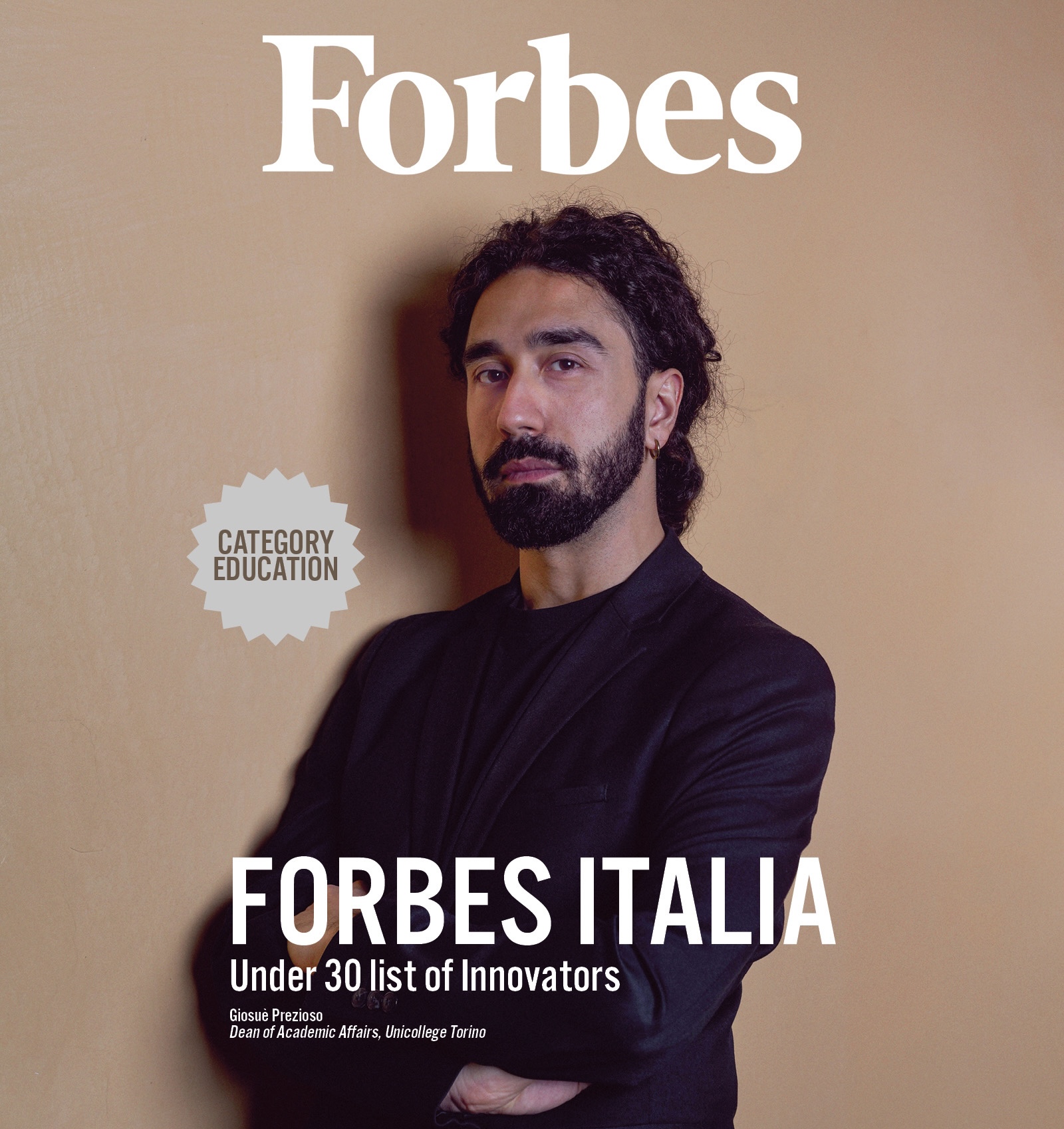
    He is recognized as the youngest individual to serve in this role at the international level, a distinction that contributed to his selection as a Forbes 30 Under 30 honouree in Education.

    He earned his Bachelor of Arts in the United States, followed by a Master of Science in Art, Law and Business from Christie's—accredited by the University of Glasgow. He later pursued dual doctoral studies in the United Kingdom and the United States, alongside a graduate specialization in education at Harvard University's Graduate School of Education.

    Dr. Prezioso has lectured and conducted seminars at institutions including Universidad Rey Juan Carlos (Madrid), Sharif University of Technology (Tehran), the Italian Chamber of Deputies, the University of South Florida, and international economic forums.

    His scholarly work has been published by Cambridge Scholars Publishing, Egea Editore (Bocconi University), Cacucci Editore, and Kalos, and featured in The Financial Times, The Guardian, Forbes, and other international media outlets.

    The Context of Its Creation

    EduAtlas as Doctoral Research

    EduAtlas was conceived and developed within a Doctorate of Education (EdD) program, not as a side project, but as a research-driven response to a documented systemic problem in international education.

    Its development followed doctoral research standards, including formal supervision, methodological design, data validation, and academic scrutiny. Every structural decision—how systems are compared, how data are organized, how limits are defined—was shaped within a scholarly environment that prioritizes rigor over convenience.

    This context ensured that EduAtlas would not replicate existing biases or informal practices, but instead challenge them with evidence, structure, and transparency.

    EduAtlas is therefore not only a platform.

    It is the applied outcome of doctoral research.

    Methodology & Data Governance

    Research Design and Academic Context

    EduAtlas is the applied outcome of a doctoral-level qualitative research project developed within a Doctorate of Education (EdD) program at Westcliff University, a regionally accredited institution of higher education in the United States.

    The project was formally submitted, supervised, and evaluated as part of the doctoral research requirements and was reviewed under Institutional Review Board (IRB) procedures governing ethical research conduct, data governance, and methodological integrity.

    The research design adopts a qualitative, interpretive, and systems-oriented methodology, aimed at addressing a documented gap between extensive theoretical scholarship on international and comparative education and the limited availability of applied, technology-driven tools.

    Conceptual and Theoretical Framework

    The methodological framework underpinning EduAtlas integrates:

    Comparative Education Theory

    Supporting structured cross-national analysis of education systems

    Systems Theory

    Conceptualizing education as interconnected institutional, legal, cultural, and epistemic subsystems

    Cultural Responsiveness

    Mitigating epistemic bias and ensuring equitable representation of non-dominant education systems

    Data Sources and Source Validation

    EduAtlas relies exclusively on authoritative, verifiable, and traceable sources, selected in accordance with doctoral research standards and institutional guidelines:

    Official Ministries of Education and national education authorities
    Governmental publications, legal decrees, and regulatory frameworks
    Public and accredited universities and higher education agencies
    International and intergovernmental organizations
    Peer-reviewed academic literature in comparative education

    Data Analysis and Structuring

    Data analysis is conducted through thematic categorization and comparative synthesis, allowing national education systems to be examined both individually and relationally. Analytical dimensions include:

    System Structure
    Educational Cycles
    Grading Logic
    Credit Allocation
    Qualification Pathways
    Conceptual and Theoretical Framework

    The EduAtlas project operates under Institutional Review Board (IRB) oversight, ensuring compliance with U.S. federal regulations governing ethical research conduct (45 CFR 46) and internationally recognized principles of research ethics.

    Respect for Persons

    Through transparency and responsible knowledge representation

    Beneficence

    By minimizing the risk of misinterpretation or academic harm

    Justice

    Through equitable inclusion and non-hegemonic representation of all education systems

    Data Governance, Transparency, and Limitations

    EduAtlas explicitly acknowledges the absence of a single, globally recognized authority capable of harmonizing all education systems worldwide. Consequently, the platform does not claim absolute or binding authority.

    Data governance within EduAtlas is characterized by:

    Transparent documentation of sources and methodologies
    Transparent documentation of sources and methodologies
    Transparent documentation of sources and methodologies

    Why EduAtlas Was Necessary

    Addressing a Structural Gap in Global Education

    Today, the interpretation and comparison of global education systems—despite involving all 196 UN-recognized countries, millions of mobile students annually, and thousands of inter-institutional agreements—is still largely conducted through fragmented, non-standardized, and often informal practices.

    In the absence of a shared global framework, these operations are typically carried out by three categories of actors.

    Families

    Families are increasingly required to make high-stakes educational decisions without prior experience in international education. Most families lack linguistic access to official ministerial documents, familiarity with foreign qualification frameworks, or the methodological tools necessary to compare grading systems, credits, and degrees across borders.

    Decisions are frequently based on translated summaries, informal advice, or non-comparable online sources, exposing students to academic and financial risk before mobility even begins.

    Students

    Students are frequently required to navigate global education systems with a high degree of autonomy. In the absence of a shared, publicly accessible framework, students often rely on personal interpretation or seek support from private agencies and specialized organizations.

    While such services can be valuable, the broader system remains characterized by uneven visibility and limited methodological standardization.

    Educators & Officers

    Educators and international officers carry institutional responsibility for credit conversion, degree recognition, and academic equivalency. While they often possess deep expertise, no individual or office can reasonably maintain authoritative knowledge of all 196 national education systems.

    Equivalencies are frequently conducted manually, vulnerable to interpretative variance, outdated information, cultural bias, and unintended inequity.

    Across all three groups, the same structural condition persists:

    global education operates without a globally governed, academically verified reference system.

    EduAtlas was created as a direct response to this condition.

    EduAtlas does not claim to eliminate complexity, nor does it claim absolute authority—because no such authority exists in global education. What it does provide is something fundamentally different from prevailing practices: methodological accountability.

    EduAtlas was conceived, designed, and developed within a Doctorate of Education (EdD) program at an accredited U.S. university, and its research design, data governance, and ethical procedures were reviewed and accepted under Institutional Review Board (IRB) oversight, in compliance with federal research regulations and internationally recognized principles of research ethics.

    The platform relies exclusively on authoritative sources, including official ministries of education, national governments, legally binding decrees, public and accredited universities, international organizations, and peer-reviewed academic research in comparative and international education. Data are systematically cross-validated, contextualized, and updated, rather than interpreted in isolation.

    EduAtlas is therefore not positioned as a perfect system, but as an accountable one.

    Crucially, it also incorporates an open, always-available reporting and feedback mechanism, allowing users—students, families, educators, and institutions—to signal discrepancies, updates, or contextual nuances directly to the project team. This reflects a foundational academic principle: knowledge improves through transparency, critique, and collective verification.

    OUR PHILOSOPHY

    EduAtlas is, by design,

    FOR PEOPLE
    BY PEOPLE
    WITH PEOPLE

    How EduAtlas Works

    Four Free Functions, Simple to Use, Rigorous by Design

    100% FREE ACCESS
    Explore Education Systems Worldwide
    Convert Your Transcript
    Compare Grades Across Countries
    Check Degree Compatibility

    Export & Share Your Results

    All outputs can be exported for official documentation

    PDF export ready
    Export to PDF
    Export the data to PDF format
    A4 format
    One button download
    Print ready
    Print your selection
    High-quality print format optimized for official documentation
    A4 & Letter sizes
    Professional layout
    PDF export ready
    Send via Email
    Share instantly with institutions, employers, or colleagues
    Instant delivery
    PDF attachment included

    The platform is openly accessible and requires no subscription. Behind this simplicity lies a rigorous structure that translates global educational complexity into usable knowledge.

    EduAtlas does not replace institutional judgment.
    It strengthens it.

    Explore EduAtlas Now


    Back to top
    Send feedback

    You may report inaccuracies, suggest improvements, or share appreciations. All feedback is reviewed and supports the ongoing quality of the platform.